
How to Choose the Right Nozzle for Beads, Dots & Packaging Applications
- Protek

- Apr 23
- 5 min read
Choosing the correct hot melt nozzle can make or break the efficiency and precision of your adhesive application process. Whether you’re working with beads, dots, or packaging applications, the right nozzle ensures accurate glue placement, reduced waste, and optimal bond strength. But how do you choose the right hot melt nozzle?
At Protek Adhesive Systems, based in the North West of England and serving customers UK-wide, we specialise in hot melt systems, adhesive machinery servicing, and nozzle replacements. That’s why we’ve put together a helpful guide to help you choose the right adhesive nozzle, understand different nozzle types, and keep your production lines running efficiently.
Let’s break it down step by step.
Table of Contents
Understanding Hot Melt Nozzles
Why Nozzle Choice Matters for Beads, Dots & Packaging
Common Adhesive Nozzle Types Explained
How to Choose the Right Adhesive Nozzle for Your Application
Bead vs Dot Glue Application: Which Should You Use?
Glue Nozzle Replacement: When and How to Do It
Key Takeaways for Hot Melt Nozzle Selection
Understanding Hot Melt Nozzles
Hot melt nozzles play a crucial role in how, where, and how much adhesive is applied. Controlling the amount, placement, and shape of the glue, it is important to ensure you choose the right hot melt nozzle for your production.
The Role of a Nozzle in Adhesive Application
The nozzle affects:
Bead width and placement – crucial for sealing and bonding.
Dot pattern uniformity – essential in carton sealing or product assembly.
Flow control – preventing waste and ensuring consistent adhesive delivery.
In short, the nozzle bridges the gap between your hot melt machine and the final product quality.
Why Nozzle Choice Matters for Beads, Dots & Packaging
Choosing the wrong nozzle type can lead to:
Inconsistent glue patterns
Wasted adhesive and downtime
Blocked or burnt nozzles
Compromised product presentation
For packaging lines, even minor deviations in bead or dot size can affect sealing performance and long-term durability. The right nozzle ensures precise glue placement, enhancing efficiency, reliability, and cost control.
At Protek, we supply and service Nordson-compatible hot melt nozzles and custom adhesive solutions across the UK. Learn more about our servicing options here.
Common Adhesive Nozzle Types Explained
Different adhesive applications call for different nozzle types. Below is a quick overview of the most commonly used hot melt adhesive nozzle types and their purposes.
1. Bead Nozzles
Bead nozzles dispense a continuous line of adhesive and are ideal for:
Case and carton sealing
Product assembly
Edge bonding
They come in various diameters and angles, allowing you to control flow rate and bead width. Smaller orifice sizes deliver finer lines, while larger ones are suited for heavier applications.
2. Dot Nozzles
Dot nozzles apply precise adhesive dots, perfect for intermittent gluing or spot applications. They are common in:
Packaging and labelling
Bookbinding
Product assembly where weight reduction is key
Using dots instead of beads can reduce adhesive usage by up to 50%, making it a sustainable and cost-effective choice.
3. Spray Nozzles
Spray nozzles atomise hot melt adhesive into a fine mist, ideal for:
Wide coverage areas
Non-contact applications
Delicate substrates sensitive to heat
Spray systems often require precise calibration but offer exceptional coverage control.
4. Multi-Orifice Nozzles
Multi-orifice nozzles deliver multiple beads or dots simultaneously, reducing cycle times and improving throughput for high-speed production lines.
5. Custom Nozzles
At Protek Adhesive Systems, we can supply bespoke nozzles designed to match your production requirements, adhesive type, and desired finish. Whether you need angled tips, special orifice patterns, or high-temperature alloys, we can help with custom nozzles.
How to Choose the Right Adhesive Nozzle for Your Application
When choosing a nozzle, several factors should guide your decision:
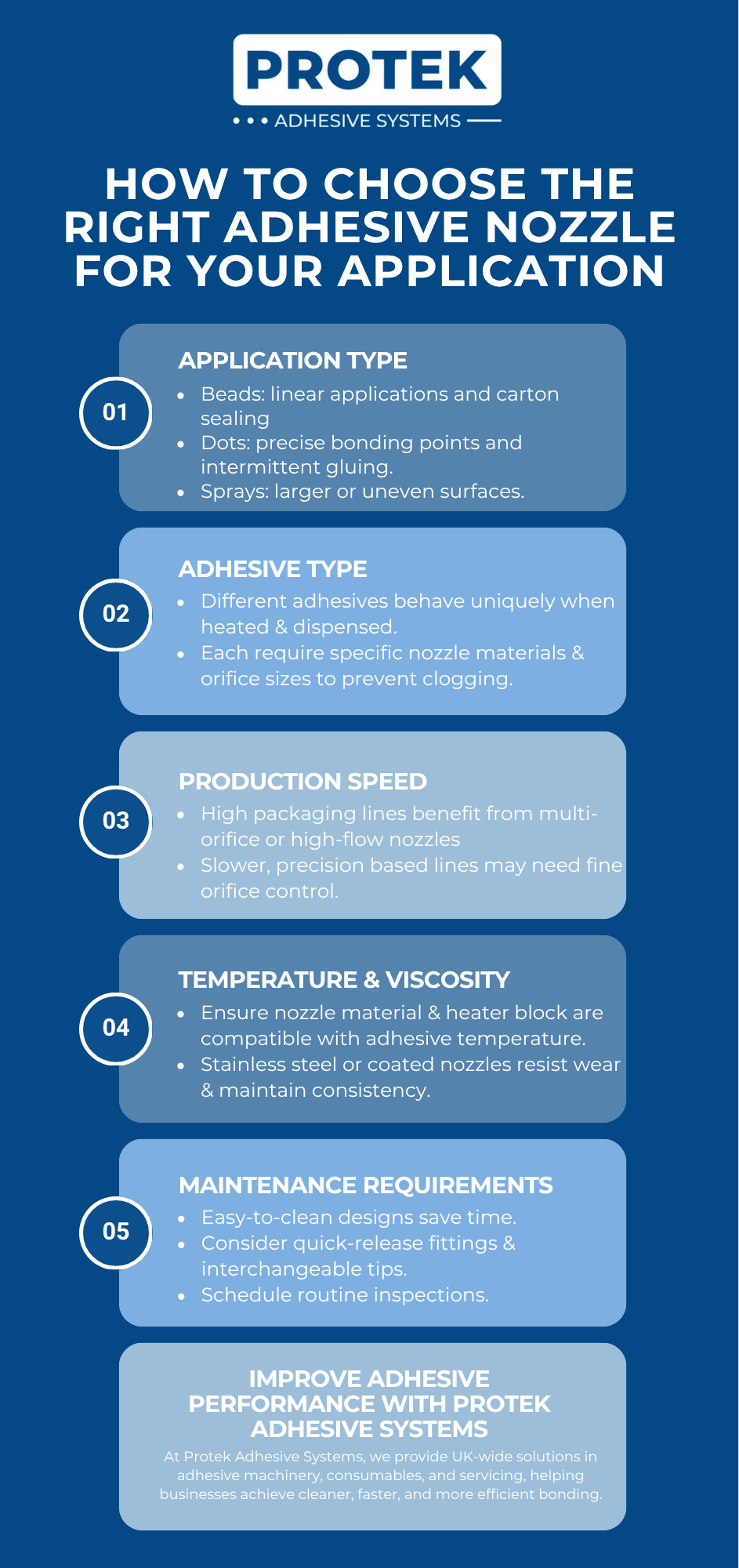
1. Application Type
Ask yourself: are you applying a bead, dot, or spray pattern?
Beads suit linear applications and carton sealing.
Dots fit precise bonding points and intermittent gluing.
Sprays are ideal for larger or uneven surfaces.
2. Adhesive Type
Different adhesives behave uniquely when heated and dispensed. Hot melts, reactive PUR adhesives, and pressure-sensitive glues each require specific nozzle materials and orifice sizes to prevent clogging or degradation.
3. Production Speed
High-speed packaging lines benefit from multi-orifice or high-flow nozzles, while slower, precision-based lines may need fine orifice control.
4. Temperature & Viscosity
Ensure the nozzle material and heater block are compatible with your adhesive’s temperature and viscosity range. Stainless steel or coated nozzles resist wear and maintain consistency under heat.
5. Maintenance Requirements
Easy-to-clean designs save time and reduce downtime. Consider quick-release fittings and interchangeable tips for flexible production environments.
Schedule routine inspections to detect early signs of nozzle wear. Protek’s servicing solutions help prevent costly breakdowns and extend the life of your equipment.
Bead vs Dot Glue Application: Which Should You Use?
The bead vs dot debate comes down to your desired balance of precision, efficiency, and adhesive usage.
Application Type | Typical Uses | Advantages | Considerations |
Bead | Carton sealing, assembly lines | Strong continuous bond | Higher adhesive use |
Dot | Spot gluing, intermittent bonding | Precise, efficient, less adhesive waste | May not suit all materials |
Spray | Large or delicate surfaces | Even coverage, non-contact | More complex setup |
For most packaging applications, a bead nozzle ensures consistent sealing strength. However, if you’re targeting material savings or light assembly, dot application is the smarter choice.
Glue Nozzle Replacement: When to Do It
Over time, adhesive nozzles experience wear, clogging, or carbon build-up that reduces efficiency. Knowing when to replace or clean them is key to keeping your production smooth and efficient.
When to Replace a Hot Melt Nozzle
Regular maintenance is important to keep your production running smoothly. You will need to replace your nozzle when you notice:
Uneven or incomplete bead/dot formation
Dripping or delayed adhesive flow
Increased machine pressure to maintain output
Discolouration or burnt adhesive residue
At Protek Adhesive Systems, we offer nozzle cleaning, refurbishment, and replacement services to ensure your machinery performs at peak capacity. View our service options here.
Key Takeaways for Hot Melt Nozzle Selection
The right hot melt nozzle enhances efficiency, accuracy, and adhesive savings.
Choose bead nozzles for continuous applications, dot nozzles for precision, and spray nozzles for wide or delicate surfaces.
Consider adhesive type, viscosity, temperature, and production speed when selecting a nozzle.
Regular nozzle maintenance and replacement prevents downtime and product quality issues.
Partnering with experts like Protek Adhesive Systems ensures you have access to the best equipment, servicing, and advice across the UK.
Frequently Asked Questions
What are the different adhesive nozzle types?
The main adhesive nozzle types include bead, dot, spray, and multi-orifice nozzles. Each is designed for specific applications, bead nozzles for continuous sealing, dot nozzles for spot gluing, and spray nozzles for wide-area coverage.
How do I choose the right adhesive nozzle?
To choose the right adhesive nozzle, consider your application method (bead, dot, or spray), adhesive viscosity, temperature requirements, and machine speed. Consulting with an expert like Protek Adhesive Systems ensures you get the best match for your operation.
How often should I replace a glue nozzle?
Replace glue nozzles when you notice clogs, inconsistent flow, or burnt residue. Depending on usage, this could be anywhere from every few weeks to several months. Routine maintenance from Protek’s servicing team can extend nozzle lifespan.
Improve Adhesive Performance with Protek Adhesive Systems
Choosing the right hot melt nozzle is not just about precision; it’s about ensuring the long-term performance, reliability, and efficiency of your adhesive system. From bead vs dot applications to custom nozzle configurations, the right decision can significantly enhance production outcomes.
At Protek Adhesive Systems, we provide UK-wide solutions in adhesive machinery, consumables, and servicing, helping businesses achieve cleaner, faster, and more efficient bonding.
Contact our expert team today to discuss your nozzle or hot melt system requirements.



Comments